
Ferritic or martensitic Fe-Cr stainless family; exact chemistry depends on the specified 400-series grade.
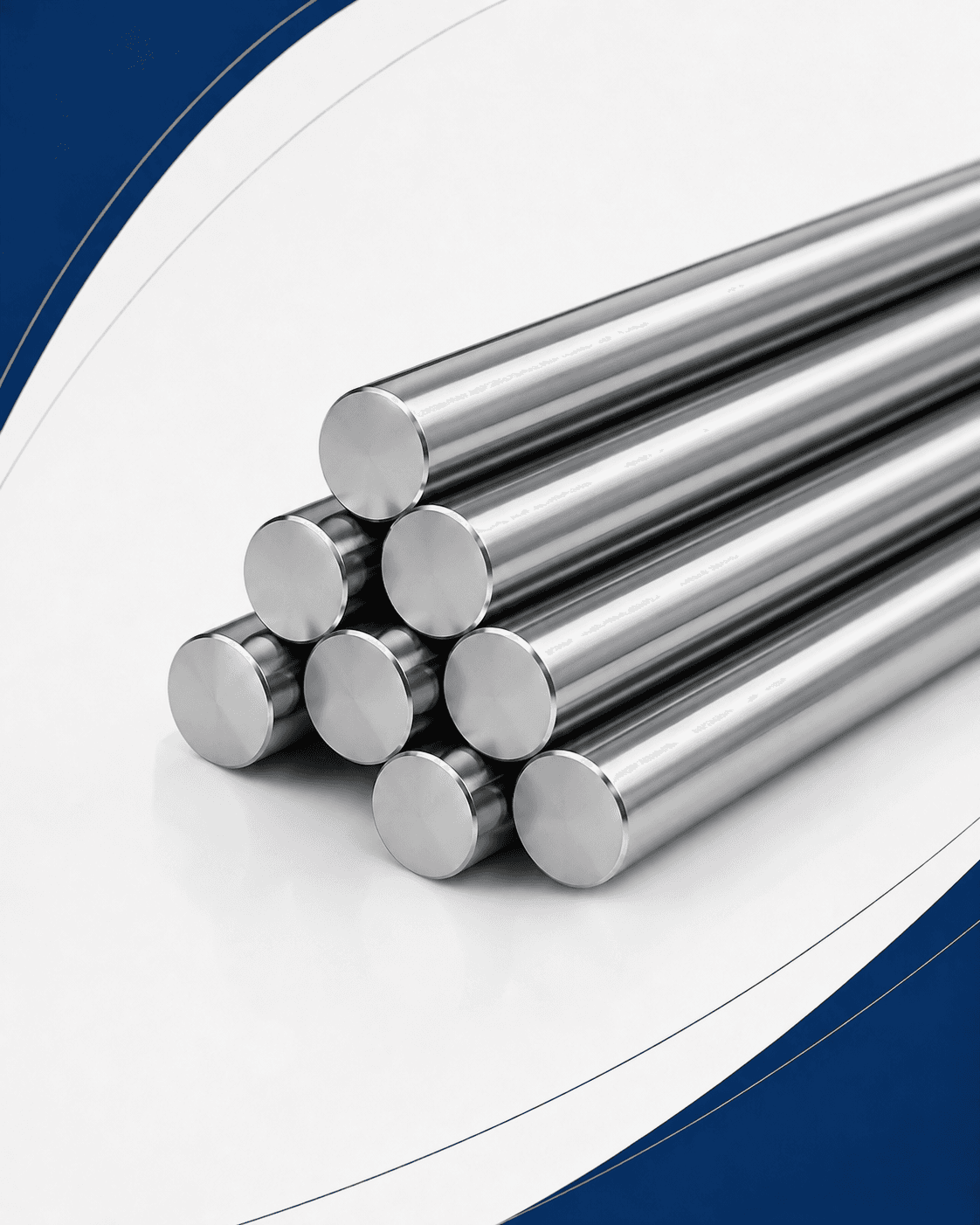
Material gradeStainless Steel Grades
/ 01 — TECHNICAL OVERVIEW
Stainless Steel 400
Stainless steels combine corrosion resistance with practical fabrication and broad product availability. Austenitic grades such as 304/304L and 316/316L are widely used across process, food, pharmaceutical and general engineering applications, while higher-alloy and heat-resistant grades serve more demanding environments.
A family of ferritic and martensitic stainless grades. The exact grade—such as 409, 410, 420, 430 or another designation—must be specified because properties and applications vary significantly.
The correct material depends on more than corrosion resistance alone. Temperature, pressure, chloride exposure, chemistry, erosion, fabrication route, weldability, mechanical strength, product form, code requirements and lifecycle cost should be reviewed together. Final grade selection remains with the customer’s qualified engineer, designer or material specialist.
How it is made
01
Steelmaking and refining establish the grade chemistry and control residual elements.
02
The alloy is cast and hot worked into billet, slab or other feedstock for the selected product form.
03
Hot/cold processing creates pipe, tube, flat product, bar, flange or fitting geometry.
04
Solution annealing or grade-specific heat treatment develops corrosion resistance and mechanical condition.
05
Descaling, pickling, machining or polishing is followed by inspection, traceability and certification.
Request reviewed quotation Material documents on request
/ 02 — PRODUCT DETAIL
Built around the specification.
Key characteristics and commonly referenced standards from the supplied technical content master.
Key features01 02 03 04
Available across multiple project product forms subject to specification
Heat-wise traceability and MTC support
PMI, NDT and third-party inspection options
Common specification references
STD
ASTM A240/A240M — Plate, sheet and strip
STD
ASTM A276/A479 — Stainless bars and shapes
STD
ASTM A312/A790 — Austenitic / duplex stainless pipe as applicable
STD
ASTM A213/A249/A269/A789 — Product-specific stainless tube standards
STD
ASTM A182 / A403 / A815 — Forged flanges and wrought fittings
STD
EN 10088 / product-specific EN — European stainless designations and delivery standards
/ 03 — MATERIAL RANGE
Grades matched to the service.
Commonly requested families are shown below. Availability is confirmed against the complete specification.
Material familyCommon gradesTypical selection context
Specified gradeStainless Steel 400
Supply is reviewed by product form, governing standard, condition and service
Alloy familyStainless Steel
Related grades are not treated as automatic substitutes
/ 04 — SUPPLY & CUSTOMISATION
Available forms and enquiry basis.
Pipes, tubes, flanges, butt weld fittings, sheets and plates, coils and round bars.
ParameterTypical information to specify
01Available forms
Pipes, tubes, flanges, butt weld fittings, sheets and plates, coils and round bars.
02Product standard
State the material specification for the selected pipe, tube, flat product, bar, flange or fitting form
03Supply condition
Solution annealed, age hardened, cold worked, hot finished, pickled, polished or as specified
04Dimensions
Product-form dimensions, tolerances, cut lengths and end/edge preparation
05Testing
PMI, mechanical, corrosion, NDT or supplementary testing as required
06Documentation
Material test certificates and inspection reports on request
07Enquiry basis
Grade / UNS, product form, standard, dimensions, quantity and delivery destination
/ 05 — DIMENSIONS & SIZE RANGE
Dimensions aligned to the manufacturing route.
Dimensions must be specified for the selected product form; a grade designation alone does not define size, tolerance or condition.
Product formOrdering dimensionsCondition / finishStandard basis
PipeNPS/OD, schedule or wall, length and endsSeamless/welded, heat treated and finishedMaterial standard plus ASME dimensions
TubeOD, wall, length/coil/U-bend geometrySeamless/welded, annealed and surface finishProduct-specific ASTM/EN standard
Flat productThickness, width, length or coil geometryHot/cold rolled, annealed, pickled or polishedFlat-product material standard
Bar / forgingProfile size, tolerance and cut lengthHot finished, forged, cold finished or machinedBar/forging material standard
/ 06 — MANUFACTURING STANDARDS
Standards aligned for every order.
The material standard, dimensional standard and project requirements should be stated separately.
ReferenceWhat it coversRole
ASTM A240/A240MPlate, sheet and strip
Flat products
ASTM A276/A479Stainless bars and shapes
Long products
ASTM A312/A790Austenitic / duplex stainless pipe as applicable
Pipe
ASTM A213/A249/A269/A789Product-specific stainless tube standards
Tube
ASTM A182 / A403 / A815Forged flanges and wrought fittings
Piping components
EN 10088 / product-specific ENEuropean stainless designations and delivery standards
European reference
/ 06 — REFERENCE MATERIAL DATA
400 material reference.
A concise engineering identity for procurement. Exact chemical limits and mechanical acceptance values vary by product form, size, condition and specification edition; the certified MTC governs supplied material.
Chemistry and alloy identityPrincipal alloying profile · certification limits follow the ordered standard
Material referenceTechnical profile
Grade / designation400
Alloying systemFerritic or martensitic Fe-Cr stainless family; exact chemistry depends on the specified 400-series grade.
Certification basisHeat analysis and product requirements are certified against the exact material specification stated on the purchase order
Mechanical-property basisProduct-form and condition dependent · verify certified values
Property basisSupply requirement
Mechanical profileTensile, yield, elongation and hardness depend on exact grade, product form, thickness and heat-treatment condition.
Acceptance valuesUse the tensile, yield, elongation and hardness limits in the ordered product-form standard and specified condition
CertificationActual heat/lot results are reported on the agreed material test certificate
/ 07 — INSPECTION & TESTING
Evidence before dispatch.
01Grade / UNS and product-standard verification
02Heat-number traceability and MTC review
03PMI against the specified alloy family
04Dimensions, tolerance and surface-condition inspection
05Mechanical and hardness testing to the product specification
06Corrosion, microstructure or intergranular testing when required
07NDT and third-party witnessing against the approved inspection plan
PACKAGING & MARKING
Protected and traceable.
01Product-form-specific protection for machined faces, surfaces and ends
02Heat-wise segregation and durable grade identification
03Non-contaminating separators for corrosion-resistant alloys
04Moisture-resistant wrapping or export cases where required
05Package labels aligned with grade, heat, dimensions, quantity and purchase order
/ 08 — APPLICATIONS & INDUSTRIES
Engineered for demanding service environments.
From process plants to marine systems, NESCO coordinates material, dimensions and documentation around the operating conditions of each application.
01
Chemical processing02
Oil and gas03
Power generation04
Marine systems05
Heat exchangers06
Industrial fabricationIndustries servedOne supply partner across critical sectors.
Chemical processingOil & gasPower generationMarineHeat exchangersProcess equipmentGeneral engineering
/ 09 — WHY NESCO PIPE & TUBES
Built for buyers who cannot leave details to chance.
From specification review to export documentation, NESCO coordinates the technical and commercial details as one complete supply requirement.
01
Specification control
NESCO reviews the grade, product standard, dimensions, condition and acceptance criteria as one coordinated requirement.
02
Multi-material sourcing
Stainless steel, duplex, nickel alloy, copper-nickel and titanium requirements can be combined within one project enquiry.
03
Traceable documentation
Heat numbers, MTCs and agreed inspection records are aligned with the purchase order before dispatch.
04
Inspection coordination
PMI, dimensional checks, NDT and third-party witnessing can be arranged against an approved inspection plan.
05
Value-added processing
Cutting, machining, end preparation, polishing or protective finishing can be reviewed with the base material supply.
06
Export-ready packing
Identification, surface protection and packing are planned around product geometry and the final transport route.
07
Responsive RFQ review
Technical and commercial inputs are consolidated early so queries are resolved before quotation and production.
08
One accountable supply desk
NESCO provides a single contact for material, processing, documentation, packing and delivery coordination.
/ 10 — FREQUENTLY ASKED QUESTIONS
Clear answers before you specify.
Quick guidance on product selection, standards, dimensions, inspection and documentation. For project-specific requirements, NESCO will review the complete enquiry with your team.
01What product forms are available in 400?
Availability can include pipes, tubes, flanges, fittings, sheets, plates, coils and bars, but each form must be confirmed against its own material standard and production range.
02What standard should be specified for 400?
State both the exact grade/UNS and the product-form material standard. A plate specification cannot be assumed to cover pipe, tube, bar, flange or fitting supply.
03Can NESCO provide chemical and mechanical certificates?
Yes. An agreed material test certificate can report heat analysis and mechanical results required by the ordered specification.
04Can another grade be substituted?
Only with written approval from the responsible engineer after reviewing corrosion, strength, temperature, fabrication and code requirements.
05What information produces the fastest quotation?
Provide grade/UNS, product form, standard, size, condition, quantity, tests, certification and delivery destination.
/ 11 — REQUEST FOR QUOTATION Nesco direct sales desk
Ready to source?Start with the details you already have.
Our team will review the grade, dimensions, testing and delivery requirements together.